 Save to Pinterest
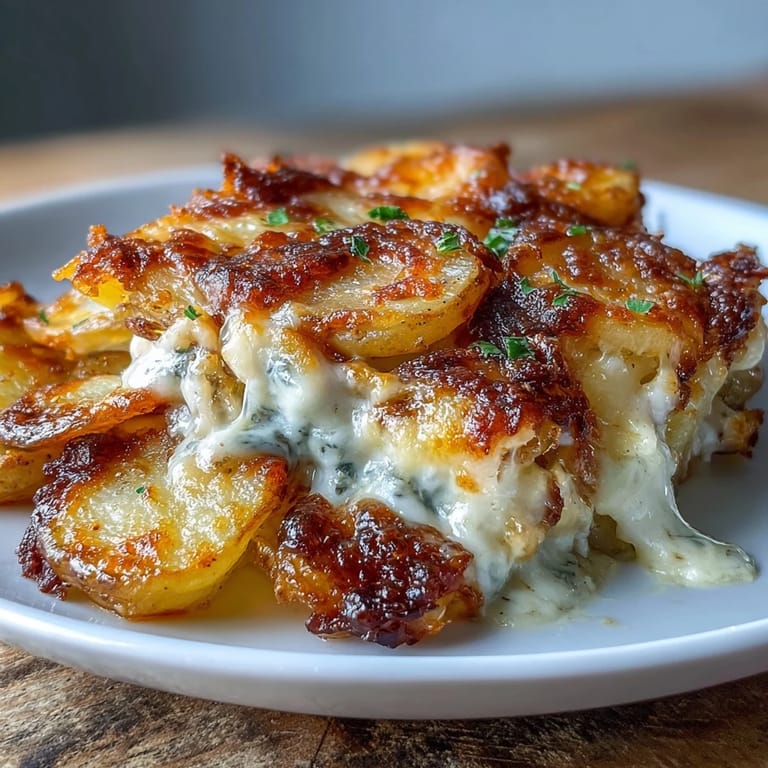
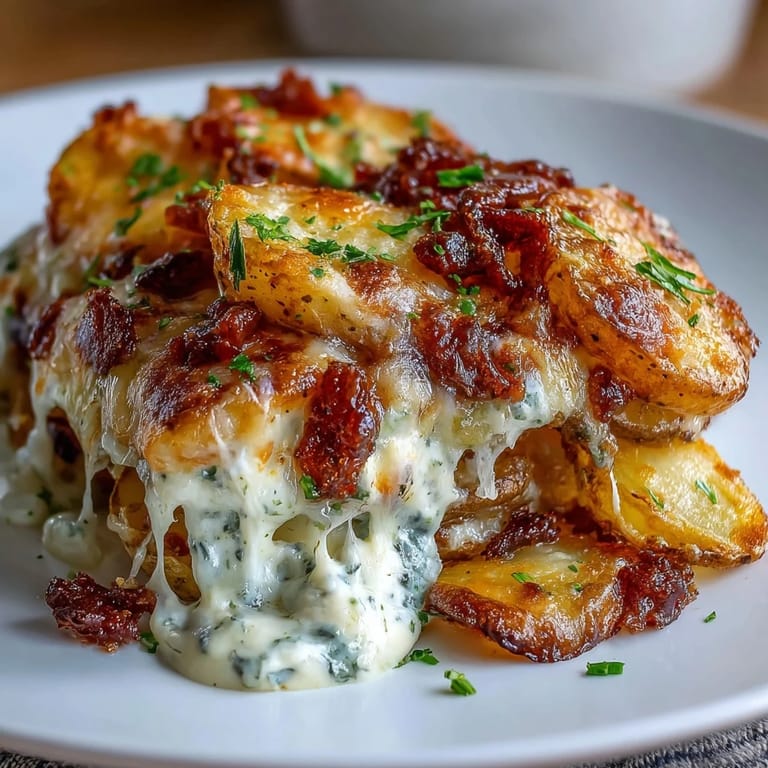
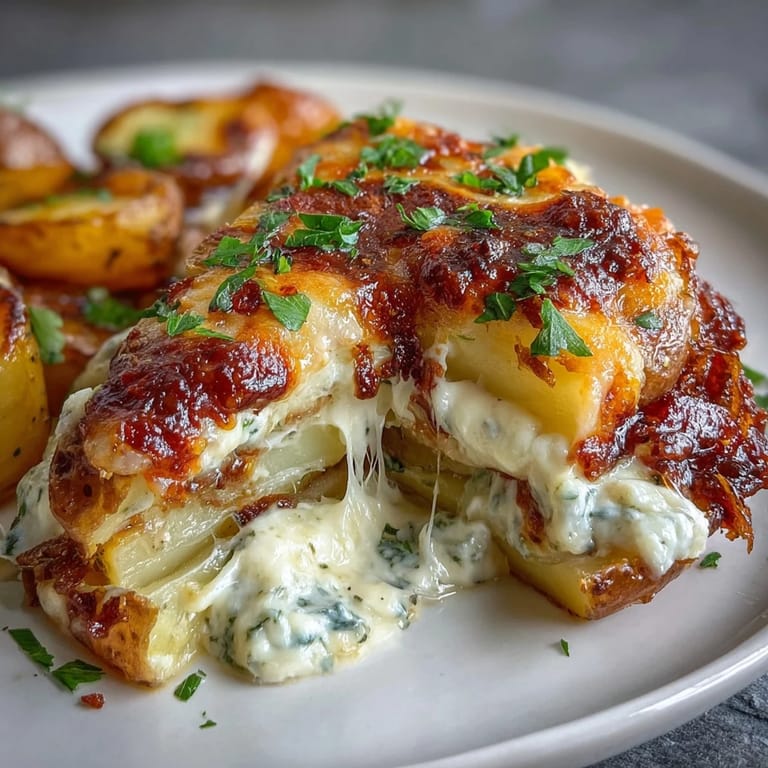
 My sister called me in a panic the night before Thanksgiving, asking if I could bring a side dish—something comforting, something that wouldn't compete with the turkey but would make people actually want seconds. I thought of scalloped potatoes, the kind where melted cheese pools between every slice and the top gets this irresistible golden crust. By the time I pulled it from the oven, my kitchen smelled so good that my neighbor texted asking what was cooking. That's when I knew this recipe was a keeper.
Last winter, I made this for a casual dinner with friends who were going through a rough time, and watching them light up at the first bite reminded me why comfort food exists. One of them asked for the recipe right there at the table, fork still in hand, which felt like the highest compliment I could get.
Ingredients
- Yukon Gold or Russet potatoes (2 lbs): Yukon Golds stay slightly waxy and hold their shape beautifully when sliced thin, but Russets work if that's what you have on hand.
- Yellow onion (1 medium): The thin slices soften into sweet pockets throughout the dish, so don't skip this layer.
- Sharp cheddar cheese (2 cups shredded): The sharpness cuts through the richness and gives the sauce real flavor, not just meltiness.
- Mozzarella cheese (1 cup shredded): This stretches and browns beautifully on top, creating that golden crust you're after.
- Whole milk (2 cups): Low-fat milk can work, but whole milk creates that silky sauce that coats your mouth in the best way.
- Unsalted butter (2 tbsp): Use real butter—it's the foundation of your roux and worth the difference.
- All-purpose flour (2 tbsp): This thickens the sauce without making it gluey, though cornstarch can substitute in a pinch.
- Salt, black pepper, garlic powder, and paprika: These seasonings whisper in the background rather than shout, letting the cheese and potatoes be the stars.
Tired of Takeout? 🥡
Get 10 meals you can make faster than delivery arrives. Seriously.
One email. No spam. Unsubscribe anytime.
Instructions
- Prepare your canvas:
- Preheat the oven to 375°F and grease your 9x13-inch baking dish with a little butter or cooking spray so nothing sticks later. Think of this as setting the stage for what comes next.
- Build the roux:
- Melt butter in a saucepan over medium heat, then add flour and whisk for a full minute—you'll see it transform from loose flour to a smooth, toasted paste. This step matters more than it seems because it's what keeps your sauce from becoming gluey.
- Create the sauce:
- Pour milk in slowly while whisking constantly, watching as the sauce goes from thin and milky to glossy and thick over about three to four minutes. When it coats the back of a spoon and you can draw a line through it, you're there.
- Season and melt:
- Take the pan off heat and stir in salt, pepper, garlic powder, and about half the cheese, letting the heat melt everything into a smooth, cohesive sauce. Taste it now—this is your chance to adjust before it goes into the potatoes.
- Layer with intention:
- Spread half the potato slices in your baking dish, then half the onion, then half the sauce, creating an even blanket over each layer. Repeat with the remaining potatoes, onions, and sauce, taking a moment to press down gently so everything melds together.
- Top and bake:
- Sprinkle the remaining cheeses and a light dusting of paprika over the top, then cover with foil and slide into the oven for forty minutes to let the potatoes soften. Remove the foil and bake another twenty-five to thirty minutes until the top is golden brown and the edges bubble slightly.
- Rest and serve:
- Let the dish sit for ten minutes after it comes out of the oven—this allows everything to set so you can cut clean portions and the sauce stays where it belongs.
 Save to Pinterest
 My mom told me once that scalloped potatoes were what her mother made when she wanted to show love without saying it out loud, and I finally understood what she meant. There's something about a warm, cheesy casserole that says more than words ever could.
A Note on Potato Slicing
The difference between a good and a great scalloped potato dish often comes down to how thin you slice the potatoes. A mandoline slicer makes this effortless and consistent, but a sharp chef's knife works too if you take your time. The thinner the slices, the more surface area for the sauce to cling to, and the faster they soften in the oven.
Cheese Combinations to Explore
While cheddar and mozzarella are a classic pairing that never disappoints, I've had success swapping in Gruyère for a more sophisticated, nutty flavor, or using a blend that includes a touch of Fontina for extra depth. If you're feeling adventurous, a small handful of smoked Gouda adds a whisper of campfire without overpowering the dish. The key is keeping one mild cheese and one with more personality so the sauce stays balanced.
Make-Ahead Magic and Storage
This dish is a make-ahead dream that makes hosting so much less stressful—assemble it completely several hours before dinner and refrigerate it covered with foil, then just pop it in the oven when you need it. If you're storing leftovers, they keep beautifully in the fridge for three to four days and reheat gently in a 300°F oven until warm through, though you can also sneak a spoonful straight from the dish at midnight if nobody's looking.
- Assemble up to eight hours ahead and refrigerate until you're ready to bake, adding five to ten minutes to the covered bake time since it will start cold.
- Leftover portions freeze surprisingly well for up to two months in an airtight container, though the texture won't be quite as creamy after thawing.
- Reheat gently and slowly to avoid the cheese separating or the potatoes drying out, and a splash of milk stirred in never hurts.
 Save to Pinterest
 Scalloped potatoes aren't just a recipe—they're an invitation to slow down and feed people well. Every time you make them, you're continuing something generous and true.
Recipe FAQs
- → What kind of potatoes work best?
Yukon Gold or Russet potatoes are ideal due to their texture and ability to hold shape when sliced thin.
- → Can I use different cheeses?
Yes, Gruyère can be used instead of cheddar for a richer, nuttier flavor, or a blend of mozzarella and sharp cheddar as suggested.
- → How do I prevent lumps in the sauce?
Whisk flour with melted butter first, then slowly add milk while whisking continuously to ensure a smooth, lump-free sauce.
- → Is it necessary to bake covered then uncovered?
Yes, covering ensures tender potatoes by steaming, and uncovering allows the top to brown and crisp pleasantly.
- → Can this dish be prepared ahead of time?
Absolutely, the dish can be assembled hours in advance and baked just before serving, making it convenient for gatherings.