 Save to Pinterest
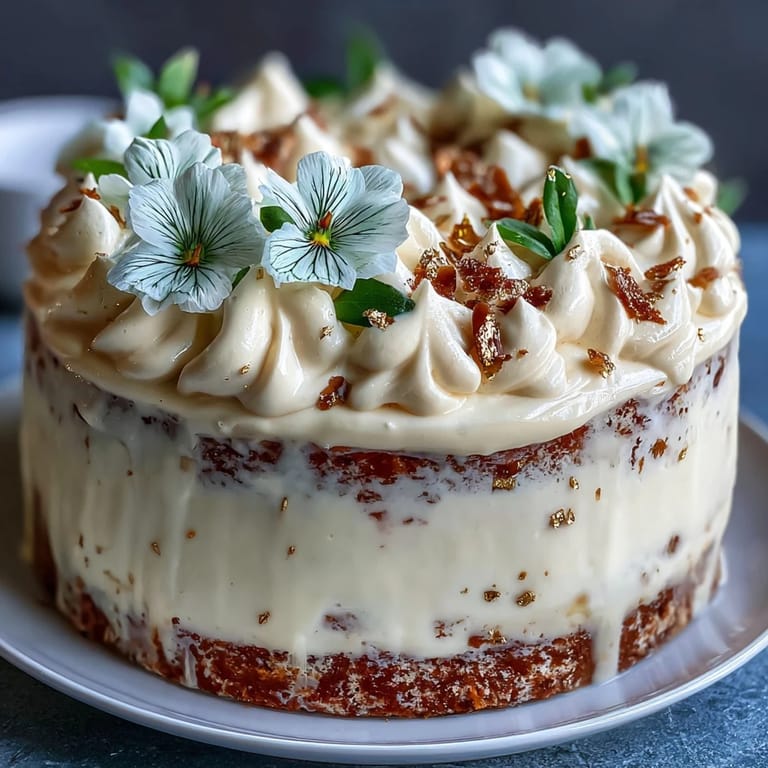
 The moment my friend told me about her graduation, I knew this cake had to be special—not just any dessert, but something that would make her feel celebrated the way she deserved. I'd been experimenting with gold leaf and edible flowers in the kitchen for months, watching how light caught the shimmer, how delicate petals could transform a simple cake into something that looked almost too beautiful to cut into. This vanilla sponge with Swiss meringue buttercream became the canvas for that vision, and the first time I assembled it for her party, I realized I wasn't just baking—I was creating a memory.
I'll never forget watching my friend's face when she saw this cake on her graduation table—she actually gasped, which honestly made every minute of careful decoration worth it. What struck me was how the gold caught the afternoon sunlight streaming through the windows, and how people kept asking if they were really allowed to eat it. That's when I knew this design had crossed from being just pretty into something that actually captured the significance of the moment.
Ingredients
- All-purpose flour: The foundation of your cake layers, and room-temperature ingredients make a real difference in how evenly it incorporates.
- Baking powder: This gives you those tender, tall layers that won't sink or become dense—don't skip sifting it with the flour.
- Unsalted butter: You need butter at room temperature so it creams smoothly with sugar, creating that light, fluffy base.
- Granulated sugar: Creaming butter and sugar for a full three minutes isn't just about texture; it's about incorporating tiny air bubbles that make the cake rise beautifully.
- Eggs and milk: Both should be room temperature so they blend seamlessly into the batter without creating lumps or curdling.
- Vanilla extract: Pure vanilla makes a noticeable difference here since the cake is simple and vanilla-forward.
- Egg whites and sugar for buttercream: The meringue method heats the eggs to 160°F for food safety, then whipping creates that impossibly silky, stable buttercream.
- Edible flowers: Source from reputable suppliers and confirm they're grown without pesticides—this is non-negotiable for something you're eating.
- Gold leaf: Food-grade 24-karat gold leaf looks more authentic than imitation gold, and it's easier to apply with a soft paintbrush.
Tired of Takeout? 🥡
Get 10 meals you can make faster than delivery arrives. Seriously.
One email. No spam. Unsubscribe anytime.
Instructions
- Prepare your pans and preheat:
- Get your oven to 350°F and grease three 8-inch round pans generously, then line the bottoms with parchment paper so your cakes slide out without sticking. Having everything ready before you start mixing is the difference between a smooth process and a stressful one.
- Combine your dry ingredients:
- Whisk flour, baking powder, and salt together in a bowl, breaking up any lumps so your cake bakes evenly. This simple step prevents streaks of unmixed baking powder that would taste bitter.
- Cream butter and sugar until it's fluffy:
- Beat them for a full three minutes—you want the mixture to go from pale yellow to almost white, which means you've incorporated plenty of air. Stop occasionally to scrape down the bowl so everything blends evenly.
- Add eggs one at a time:
- Beat well after each egg so each one fully incorporates before you add the next; rushing this step can make your batter break. The mixture might look slightly curdled between additions, but it'll come together once you add the flour.
- Alternate wet and dry ingredients:
- Start with flour, then milk, then flour again, mixing just until you don't see streaks of dry flour anymore. Overmixing creates a tough, dense cake, so stop as soon as things come together.
- Divide and bake:
- Pour batter evenly into the three pans and smooth the tops gently so they'll bake level. Bake for 28–32 minutes until a toothpick comes out clean—some moist crumbs are fine, but you don't want wet batter.
- Cool properly:
- Let cakes rest in their pans for ten minutes (this helps them set without cracking), then turn them out onto wire racks to cool completely. Decorating a warm cake is a guaranteed mess, so patience here pays off.
- Make the Swiss meringue buttercream:
- Whisk egg whites and sugar over simmering water, stirring constantly until the sugar dissolves and the mixture reaches 160°F; you'll feel it go from grainy to smooth. The heat step is crucial for food safety and also creates a more stable meringue than raw eggs.
- Whip until stiff peaks form:
- Transfer to your stand mixer and beat on high speed until the bowl cools to room temperature and peaks stand up when you lift the whisk. This takes 8–10 minutes and is worth the wait—you're building structure that holds butter.
- Add butter gradually:
- Drop in cubes a few at a time while mixing on medium speed, letting each batch blend in before adding more. If it looks separated or grainy at any point, keep mixing and it will come together into silky heaven.
- Assemble the layers:
- Place your first cake layer on a serving plate, spread a generous layer of buttercream on top, then repeat with the remaining layers. A crumb coat (a thin first layer) catches loose crumbs, chilled for 20 minutes, then a final smooth layer gives you that polished finish.
- Apply gold leaf with intention:
- Use a soft, food-safe paintbrush to gently press small sheets of gold leaf onto sections of the frosting—the static charge will make it adhere. Work slowly and don't touch the gold directly; your fingers will disturb it.
- Arrange edible flowers as the final touch:
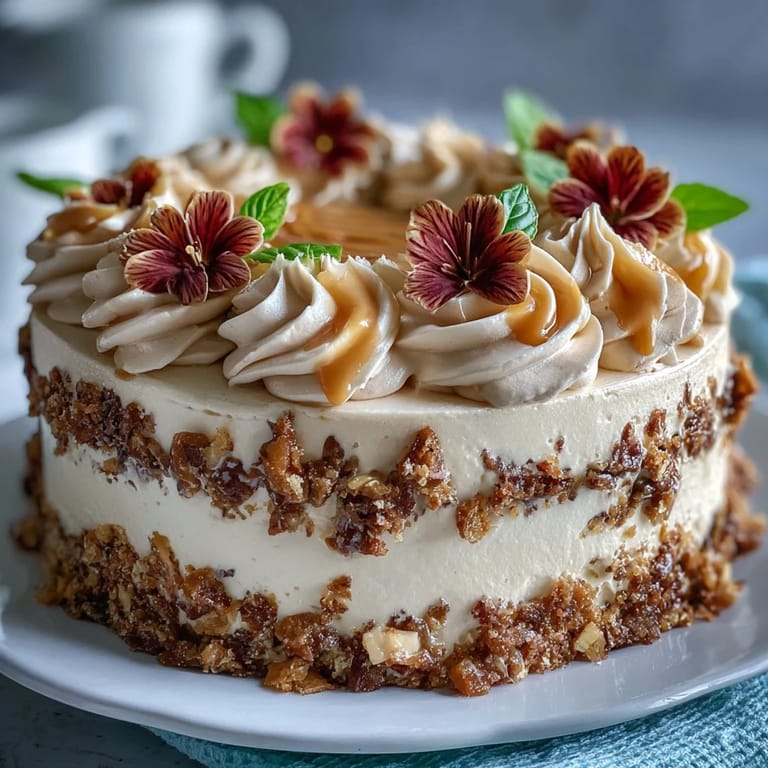
- Place flowers strategically around the cake, tucking some between gold sections for contrast and depth. Step back frequently to see how it looks from a distance—sometimes less is more.
 Save to Pinterest
 What I loved most about decorating this cake was that moment when the gold caught the light and suddenly the whole thing felt ceremonial, like we weren't just making dessert but marking something important. My friend still has a photo of that cake on her phone, and every time she shows someone, I hear the same thing: it was almost too pretty to eat.
Why Swiss Meringue Buttercream Changes Everything
The first time I made American buttercream, I thought butter and powdered sugar was all there was—but then I discovered the warmth and silkiness of Swiss meringue, and I never went back for special occasions. The egg whites heated to 160°F make it food-safe while also creating an incredibly stable frosting that doesn't break down as easily in warm weather. It tastes less sweet and more elegant, which matters when you're topping something as refined as edible flowers and gold leaf.
Sourcing Edible Flowers That Matter
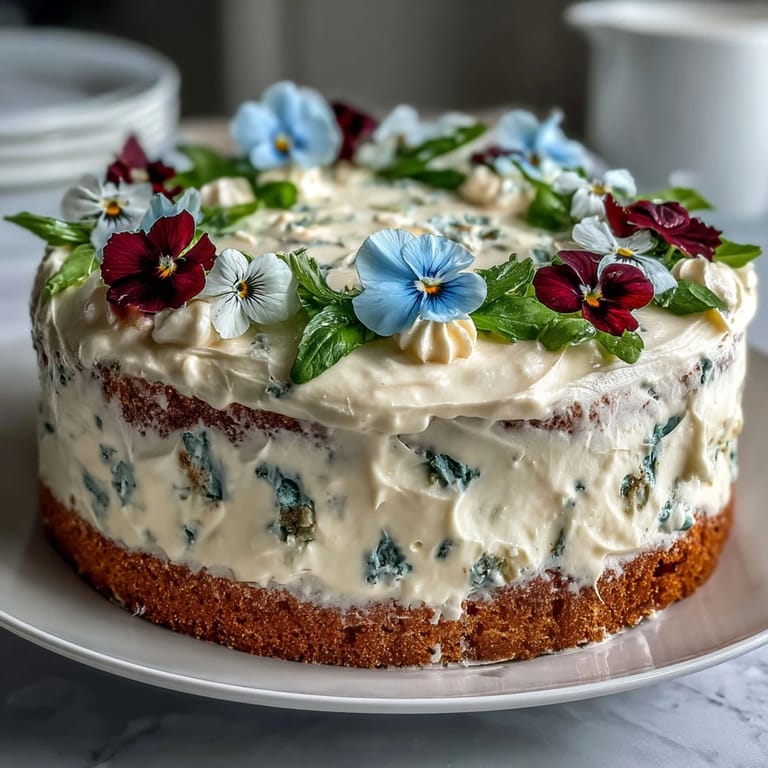
I learned early on that not every pretty flower is safe to eat, and not every edible flower is grown responsibly—so I started ordering from specialty suppliers rather than guessing. Pansies, violets, and roses are easiest to find and most visually striking, but what matters most is knowing they were grown without pesticides and packaged carefully. Once I started taking that seriously, people actually tasted them instead of just admiring them, and that changed how I thought about this cake entirely.
Making This Cake Your Own
While this cake is beautiful as vanilla, the formula is flexible enough to adapt to whoever you're celebrating. You can swap half a cup of flour for cocoa powder for a chocolate version, or adjust the flower and gold arrangement to match someone's favorite colors. Here's what I always keep in mind when making any version:
- The vanilla sponge stays moist and tender because of the milk; don't skip it even if you're changing flavors.
- Swiss meringue buttercream is stable enough for intricate work, so you can pipe details or create texture without worrying about collapse.
- Gold leaf can be as minimal or as elaborate as you want—even a few strategically placed sheets against delicate flowers creates impact.
 Save to Pinterest
 This cake became my go-to celebration dessert because it tasted as incredible as it looked, and people always felt genuinely special receiving it. Make this for someone who matters, and you'll create more than a memory—you'll mark their achievement with something beautiful they'll actually want to eat.
Recipe FAQs
- → What kind of flowers can be used for decoration?
Only edible flowers grown without pesticides, such as pansies, violets, and roses, should be used to ensure safety and flavor.
- → How is the Swiss meringue buttercream made smooth?
Whisked egg whites and sugar are combined over heat then beaten until stiff peaks form. Room-temperature butter is added gradually while mixing to create a silky texture.
- → Can the vanilla sponge be modified for different flavors?
Yes, substituting half a cup of flour with cocoa powder creates a chocolate variation without compromising texture.
- → How should the gold leaf be applied for best results?
Use a food-safe paintbrush to gently place edible gold leaf sheets on the cooled and crumb-coated cake layers.
- → What tools are essential for assembling this cake?
Three 8-inch cake pans, an electric mixer, mixing bowls, an offset spatula, a food-safe paintbrush, and wire racks are recommended.
- → Is this cake suitable for vegetarians?
Yes, this cake contains no meat products and fits a vegetarian diet.