 Save to Pinterest
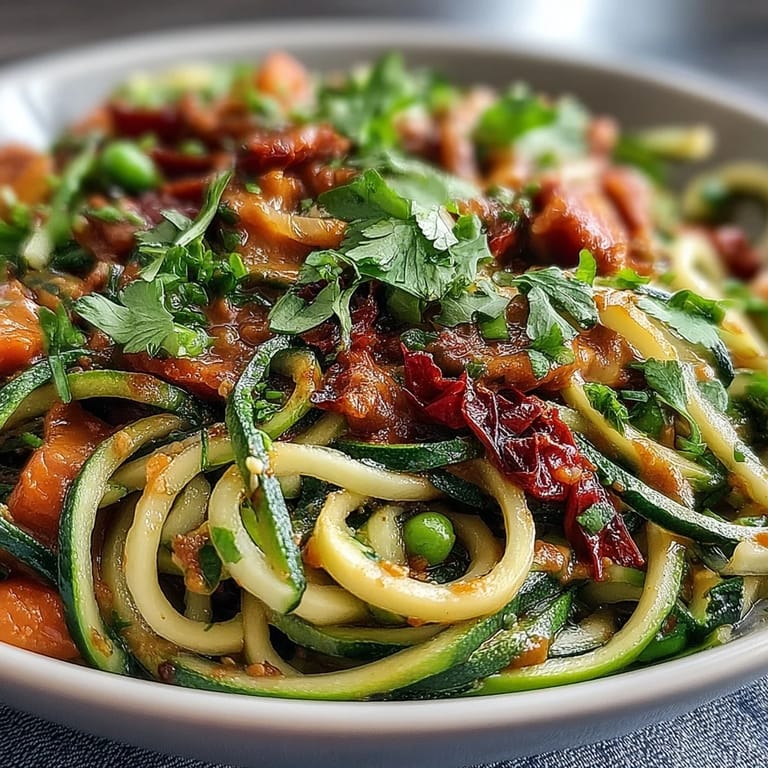
 There's something magic about the moment when you realize spiralized zucchini can be just as satisfying as noodles, without the heaviness afterward. I discovered this dish on a warm afternoon when I had a garden full of zucchini and absolutely zero desire to turn on the oven. The peanut sauce came together so quickly that I almost didn't believe how creamy and complex it tasted, and suddenly a weeknight dinner felt like I'd actually tried.
I made this for my partner last summer when we were both trying to eat lighter but still wanted something that felt indulgent. The moment they took the first bite and closed their eyes, then looked up at me in surprise—that's when I knew this one was staying in rotation. Now it's what we reach for when we want to feel nourished but not deprived.
Ingredients
- Zucchini (4 medium, spiralized): The backbone of this dish—spiralizing creates surface area that lets the sauce cling beautifully, and they cook down just enough to soften without turning into mush if you watch them.
- Red bell pepper: Adds sweetness and crunch; the color makes the whole plate pop, plus it holds its texture better than softer vegetables.
- Carrot (1 large, julienned): A natural sweetness that balances the tangy sauce and gives you something to chew on.
- Snap peas (1 cup): These are the secret to keeping everything feeling fresh and spring-like; they stay crisp no matter what.
- Green onions (2, thinly sliced): A sharp brightness scattered at the end that ties everything together.
- Fresh cilantro: Optional but worth it—a handful transforms this from good to genuinely crave-worthy.
- Natural peanut butter (1/3 cup): Use the kind where the oil sits on top; it means there are no mystery ingredients hiding in there, and it emulsifies into the sauce beautifully.
- Soy sauce or tamari (2 tablespoons): The umami backbone that makes everything taste deeper and more intentional.
- Rice vinegar (1 tablespoon): Cuts through the richness and keeps the sauce from feeling heavy.
- Lime juice (1 tablespoon): Brightness that you can taste; don't skip this or swap it for lemon.
- Maple syrup or honey (1 tablespoon): Just enough sweetness to round out the sharp edges without making it dessert.
- Toasted sesame oil (2 teaspoons): A little goes a long way; this is what gives the sauce its signature depth.
- Garlic (2 cloves, minced): Fresh and pungent; use what you have rather than powder here.
- Fresh ginger (1 teaspoon, grated): Warm spice that wakes up your mouth and pairs perfectly with peanut.
- Warm water (2-4 tablespoons): Controls the sauce consistency; start with less and add slowly so you don't dilute all your flavors.
- Red pepper flakes (optional): Just a pinch if you like heat that builds slowly rather than hits all at once.
Tired of Takeout? 🥡
Get 10 meals you can make faster than delivery arrives. Seriously.
One email. No spam. Unsubscribe anytime.
Instructions
- Prep everything first:
- Spiralize your zucchini and carrots, slice the bell pepper, halve the snap peas, and chop your green onions. Mise en place makes the actual cooking feel effortless and prevents that panicked chopping halfway through.
- Build your peanut sauce:
- In a bowl, whisk together the peanut butter, soy sauce, rice vinegar, lime juice, maple syrup, sesame oil, garlic, and ginger until it starts coming together. Add warm water one tablespoon at a time, whisking between each addition, until it reaches a pourable consistency—thicker than dressing but thinner than peanut butter straight from the jar.
- Heat your pan properly:
- Get your skillet or wok hot over medium-high heat for a minute or two before adding anything. If you want, splash in a tiny bit of sesame oil for extra flavor, but it's completely optional.
- Stir-fry the heartier vegetables:
- Add the bell pepper, carrot, and snap peas to the hot pan and let them cook undisturbed for about a minute so they get some color. Then toss everything and keep it moving for another 1–2 minutes until they're tender on the outside but still have a little snap when you bite.
- Add the zucchini gently:
- Toss in your spiralized zucchini and use two utensils to gently turn everything together for 2–3 minutes. The zucchini will release moisture, which is fine; just don't let it sit and get soggy.
- Coat with sauce and finish:
- Pour your peanut sauce over everything and toss until every strand is coated. Let it cook together for 1–2 minutes, then taste and adjust—more lime juice if it needs brightness, a pinch more salt if it feels flat.
- Serve immediately:
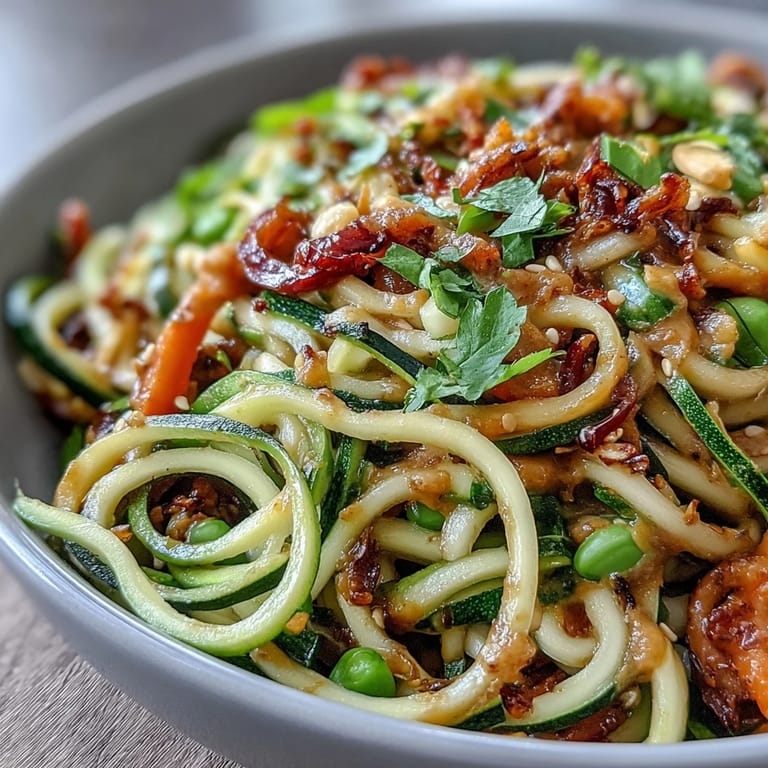
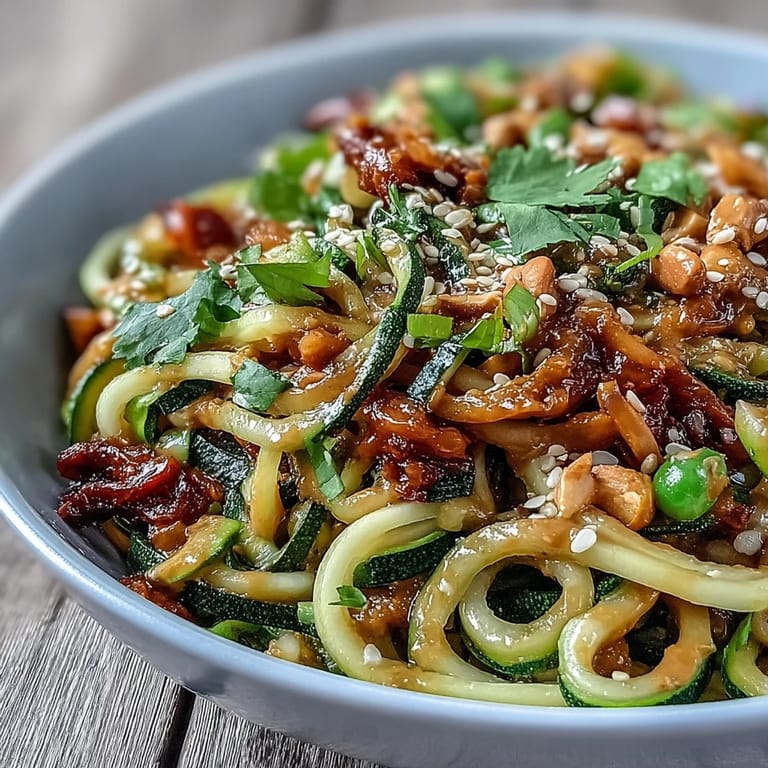
- Transfer to a plate and scatter with chopped peanuts, extra cilantro, and green onions. Eat right away while the zucchini is still warm and has some texture.
 Save to Pinterest
 What started as a way to use up garden zucchini became the dish I make when I want to feel like I'm taking care of myself. There's something grounding about a meal that's this simple, this quick, and this genuinely delicious—no shortcuts hiding anywhere.
Protein Additions That Work
This stir-fry is a canvas, so don't hesitate to add whatever protein you have on hand. Grilled chicken breast sliced thin picks up the sauce beautifully, while crumbled baked tofu absorbs all those peanut and sesame flavors. I've also made this with shrimp, which cooks so fast that you can add them right at the end with the zucchini, giving them just enough time to turn opaque and stay tender.
Vegetables You Can Swap In
Red pepper isn't sacred here, so use orange or yellow if that's what you have, or skip it entirely for broccoli florets that get crispy at the edges. Mushrooms add an earthiness that plays wonderfully with peanut sauce—slice them thin so they cook through. Baby bok choy, asparagus, or even Brussels sprouts cut in half would all be excellent choices depending on the season and what you're craving.
The Sauce Evolution
I've learned that the sauce is where all your control lives. If you want it richer, add a teaspoon of coconut milk or a bit more sesame oil. If you want it spicier, a quarter teaspoon more red pepper flakes changes the whole vibe. For nut-free versions, sunflower seed butter works just as well as peanut butter—the consistency is almost identical and the flavor is slightly milder, which some people actually prefer.
- If you're making this for someone with a soy allergy, swap tamari for coconut aminos and it works perfectly.
- Keep extra warm water nearby while you're cooking so you can thin the sauce if it seems too thick once everything's combined.
- Make a double batch of sauce and keep it in the fridge for up to a week—it's fantastic drizzled over grain bowls or used as a dipping sauce for spring rolls.
 Save to Pinterest
 This is the kind of meal that makes you realize healthy eating doesn't have to feel like deprivation. Come back to it again and again.
Recipe FAQs
- → How do I prevent zucchini noodles from getting soggy?
Cook zucchini noodles briefly over medium-high heat, tossing gently for 2–3 minutes, avoiding overcooking to keep them crisp.
- → Can I substitute peanut butter in the sauce?
Yes, use almond or cashew butter for a similar creamy texture; sunflower seed butter can be used for a nut-free option.
- → What vegetables work well in this stir-fry?
Besides zucchini, bell peppers, carrots, and snap peas are excellent. Mushrooms or broccoli also complement the flavors nicely.
- → Is this dish suitable for gluten-free diets?
Use tamari instead of soy sauce to keep the dish gluten-free without compromising flavor.
- → How can I add more protein to the meal?
Top with grilled tofu, chicken, or shrimp for added protein while maintaining the dish’s light and fresh qualities.