 Save to Pinterest
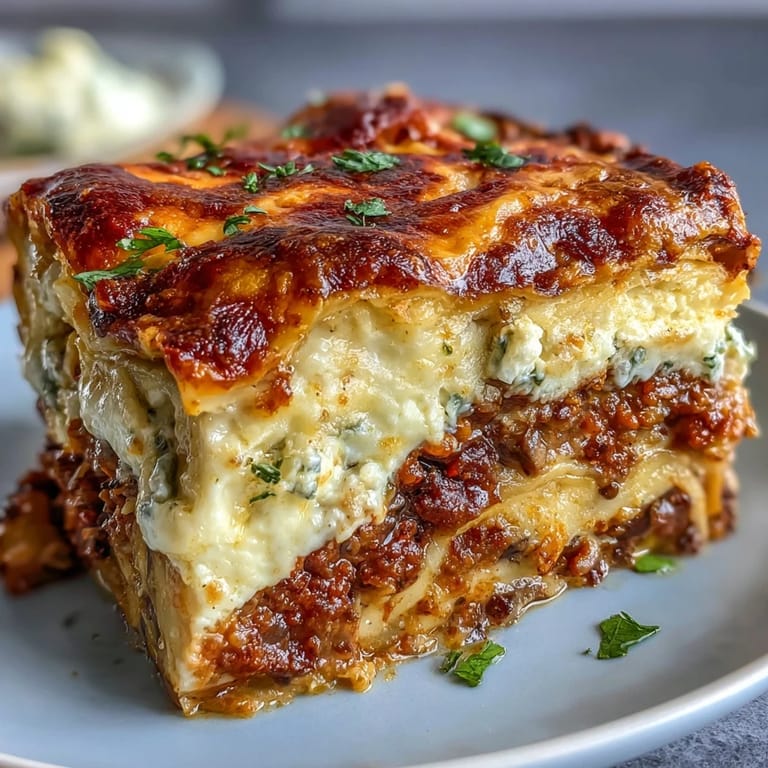
 There's something about opening your oven to find a bubbling, golden lasagne that makes you feel like you've actually figured out this whole cooking thing. I discovered this one-pan version on a Tuesday evening when I was too tired to deal with multiple pots, and honestly, it changed how I think about weeknight dinners. The smoky paprika in the lentil sauce caught me off guard at first—I wasn't sure about mixing it with tomatoes—but that's exactly what makes it special. One bite and my friend asked for the recipe before she'd even finished her plate. Sometimes the best discoveries happen when you're just trying to keep things simple.
I made this for my partner's family dinner last autumn, and I remember my mother-in-law asking if I'd studied Italian cooking because she couldn't believe how layered the flavors were. The house smelled incredible by the time we pulled it out of the oven—that mix of caramelized vegetables, toasted paprika, and melting cheese that somehow told its own story. When I explained it was all built in a single skillet, she laughed and said every cook needs a trick like this. That moment made me realize this recipe isn't just food; it's proof that you don't need complicated methods to create something people genuinely want to eat again.
Ingredients
- Olive oil: Use a good quality one you actually enjoy—this becomes the backbone of your soffritto and seasons everything that follows.
- Onion and garlic: These two are your flavor foundation, so don't rush them; let them wake up together in the heat.
- Carrot, red bell pepper, mushrooms, courgettes: Each brings its own texture and sweetness, and together they make the sauce feel substantial without heaviness.
- Smoked paprika: This is the secret voice of the whole dish—it's what makes people pause and ask what you did differently.
- Dried oregano and thyme: Dried herbs concentrate their flavor here, so they won't disappear like fresh ones sometimes do.
- Tomato paste and canned tomatoes: The paste deepens the color and richness; the canned tomatoes provide the body.
- Soy sauce: A tablespoon adds umami depth that makes people wonder about your secret ingredient.
- Red lentils: Rinse them first, and they'll break down gently into the sauce, creating creaminess without any cream.
- Vegetable stock: This keeps everything moist during the crucial simmering phase.
- Butter and flour: Equal parts create a roux that thickens your béchamel into silky luxury.
- Whole milk: Cold milk whisked slowly prevents lumps and creates that cloud-like sauce we're after.
- Ground nutmeg: Just a whisper of this transforms béchamel from safe to memorable.
- Mature cheddar or hard cheese: The stronger the cheese, the more personality your sauce gains.
- No-boil lasagne sheets: These save you the step of boiling, and they soften perfectly in the moisture of everything surrounding them.
- Mozzarella for topping: It creates that golden, bubbly finish that catches light and appetite alike.
Tired of Takeout? 🥡
Get 10 meals you can make faster than delivery arrives. Seriously.
One email. No spam. Unsubscribe anytime.
Instructions
- Heat your oven and pan:
- Set your oven to 200°C (180°C fan), and let your ovenproof pan warm with the olive oil over medium heat. You want it hot enough that the oil shimmers when you tilt it.
- Build your flavor base:
- Add chopped onion and garlic, letting them soften for about 2 minutes until they smell like the beginning of something good. This is where patience pays—don't rush them.
- Add all the vegetables:
- Toss in carrot, bell pepper, mushrooms, and courgettes, cooking for 5–6 minutes until they've softened and started releasing their moisture. You'll notice the pan smells alive with potential at this point.
- Deepen the flavor:
- Stir in smoked paprika, oregano, thyme, chili flakes if using, and tomato paste. Cook for just 1 minute—this toasts the spices and helps them bond with the oil.
- Add liquids and lentils:
- Pour in the canned tomatoes, soy sauce, rinsed red lentils, and vegetable stock. Bring everything to a gentle simmer, cover loosely, and cook for 15–20 minutes, stirring now and then. The lentils will soften and the sauce will thicken into something almost velvety.
- Make your béchamel:
- While the bolognese simmers, melt butter in a separate pan over medium heat. Whisk in flour and cook for 1 minute to remove any raw flour taste, then slowly add milk while whisking constantly to keep lumps from forming.
- Finish the béchamel:
- Once thickened (about 5 minutes of gentle cooking), remove from heat and stir in nutmeg, cheese, salt, and white pepper. Taste as you go—you want it creamy and slightly peppery.
- Begin your layers:
- Remove half of the veggie bolognese from your pan and set aside. Spread 1/3 of the béchamel over what remains in the pan, then lay down a layer of lasagne sheets, breaking them to fit snugly.
- Layer the middle:
- Spread half the reserved bolognese over the pasta, pour another third of béchamel over that, then add another layer of lasagne sheets. You're creating a structure of flavors that will meld as it bakes.
- Top and cheese:
- Finish with the remaining bolognese, your final layer of lasagne sheets, and the last of the béchamel. Sprinkle mozzarella generously on top—this becomes your golden crown.
- Bake covered then uncovered:
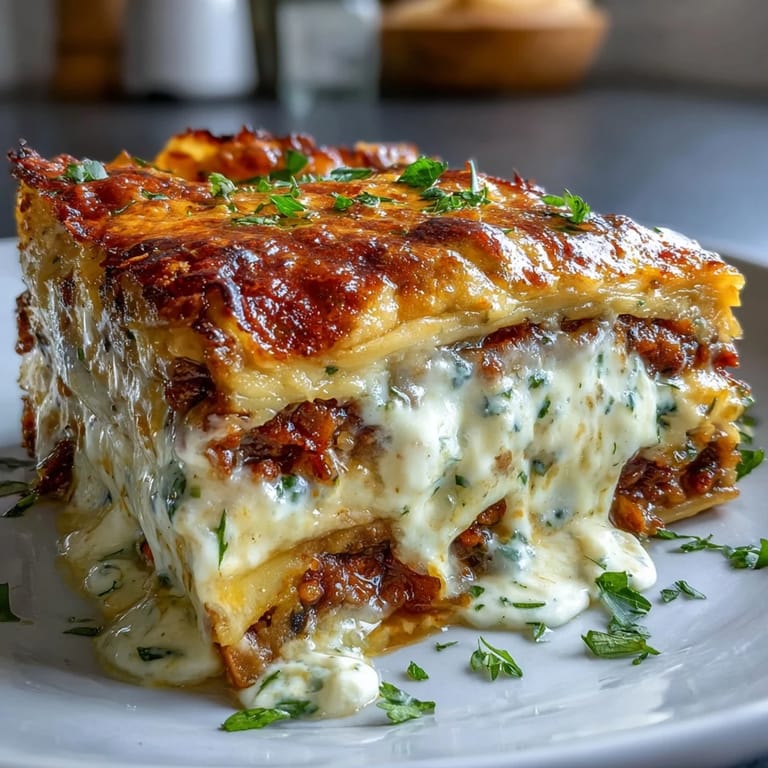
- Cover loosely with foil and bake for 25 minutes to let everything heat through without browning too fast. Remove the foil and bake another 10–15 minutes until the top is golden and bubbling at the edges.
- Let it rest:
- Let the pan sit for 10 minutes before serving—this helps the layers set so each spoonful stays intact. Garnish with fresh basil if you have it on hand.
 Save to Pinterest
 There was a moment during my colleague's birthday potluck when I watched people literally stop mid-conversation to focus on this lasagne. Someone said it tasted like comfort but with an edge, like something Italian grandmothers and modern kitchens could finally agree on together. That's when I understood that the best recipes aren't the ones that follow tradition perfectly—they're the ones that honor tradition while making it work for your actual life.
Why This Works as a One-Pan Dish
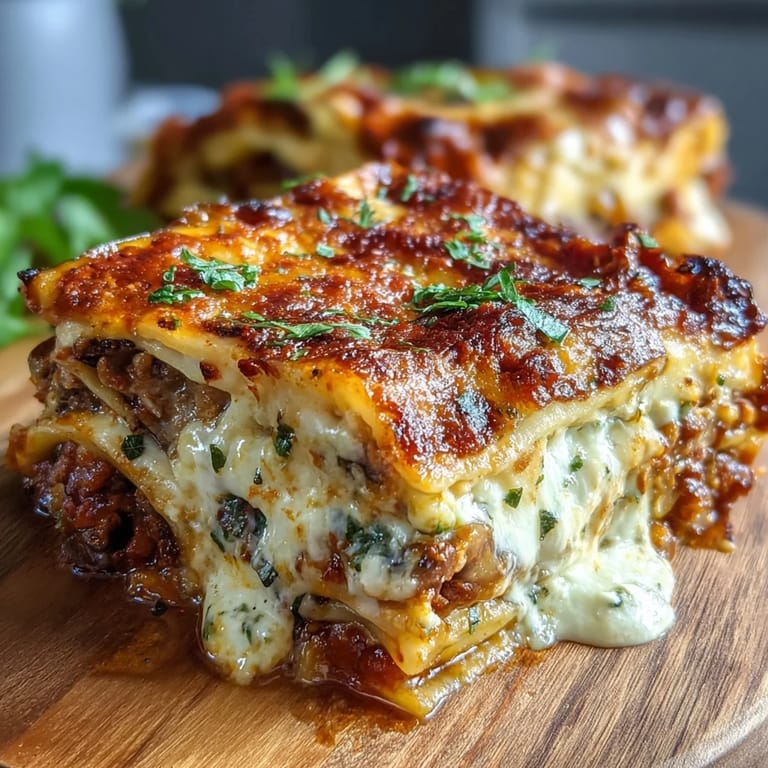
The magic of one-pan cooking is that everything you add later absorbs the flavors already built into the bottom. When you layer your pasta sheets directly onto that smoky bolognese, they're not just sitting on top—they're soaking up every bit of personality that's developed below. The béchamel acts as both a binding agent and a flavor bridge, creating moisture that keeps the whole thing from drying out. By the time it emerges from the oven, your lasagne has become one unified thing rather than separate components stacked on top of each other.
Building Flavor Without Meat
The secret to making vegetable lasagne feel hearty rather than apologetic lies in layering depth. Smoked paprika brings smokiness you'd usually get from pancetta, the soy sauce adds umami that mimics the richness of ground beef, and the mushrooms provide a meaty texture that satisfies without pretending to be something it's not. The red lentils deserve special mention—they're not a meat substitute; they're their own ingredient that happens to be just as satisfying. When you stop thinking of this as lentil lasagne and start thinking of it as one-pan smoky vegetable lasagne, suddenly it stands on its own merit rather than competing with tradition.
Making It Your Own
This is a recipe that appreciates your personal touches without demanding them. Some people add a splash of red wine to the bolognese for extra depth—I've done this, and it transforms the sauce into something more complex and wine-bar-worthy. Others layer in spinach between the pasta sheets or finish with a scatter of toasted breadcrumbs for crunch. The framework is sturdy enough to hold your ideas.
- For a vegan version, swap butter for plant-based, use oat or almond milk for the béchamel, and choose vegan cheese that melts well—cashew-based ones are surprisingly good.
- If you're cooking for someone with gluten sensitivities, use gluten-free lasagne sheets and swap the flour for cornstarch or rice flour in equal amounts.
- Make it ahead and refrigerate uncooked; just add 10–15 minutes to your bake time if it goes in cold.
 Save to Pinterest
 This lasagne has become the dish I make when I want to prove to myself that I actually know how to cook, and also when I want to feed people something that makes them feel cared for. That's a rare combination in one recipe, and it's why I keep coming back to it.
Recipe FAQs
- → Can I make this vegan?
Absolutely. Swap dairy butter for plant-based alternative, use your favorite unsweetened plant milk in the béchamel, and choose vegan cheese varieties. The result remains creamy and satisfying.
- → Why use red lentils instead of mince?
Red lentils break down beautifully during cooking, creating a thick, hearty texture that mimics traditional meat filling. They're packed with protein, fiber, and cook quickly without pre-soaking.
- → What gives the sauce its smoky flavor?
Smoked paprika is the key ingredient. Just one teaspoon infuses the entire vegetable mixture with a deep, wood-smoked essence that complements the tomatoes and lentils perfectly.
- → Do I need to cook the lasagne sheets first?
No need. Using no-boil lasagne sheets means they cook directly in the sauce and béchamel during baking, absorbing flavors and becoming perfectly tender.
- → Can I prepare this ahead?
Yes. Assemble everything up to 24 hours in advance, cover tightly, and refrigerate. Add 5-10 minutes to baking time if cooking from cold.
- → What should I serve alongside?
A crisp green salad with vinaigrette cuts through the richness. Garlic bread or roasted vegetables also make excellent accompaniments.