 Save to Pinterest
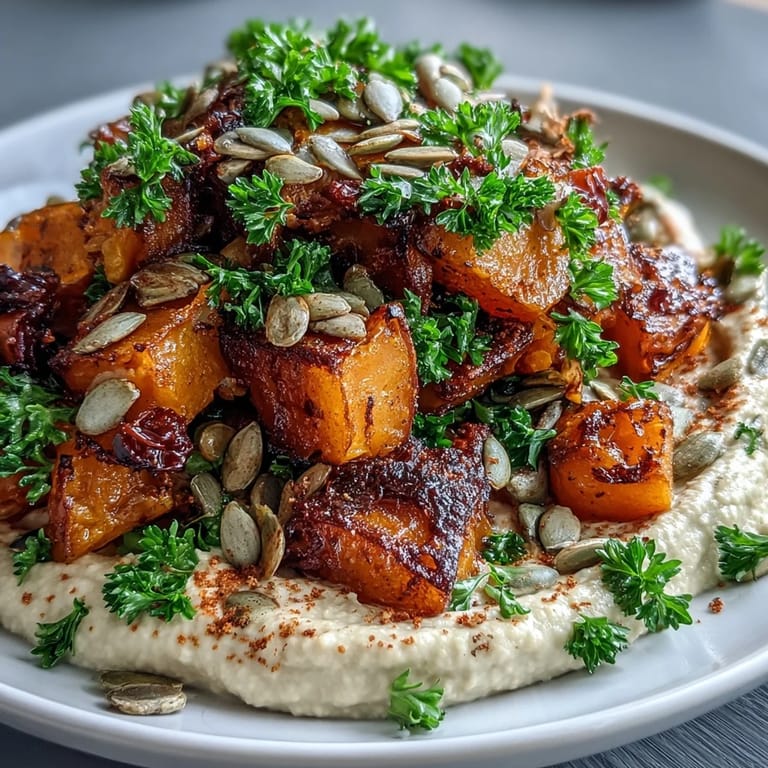
 There's something about the first genuinely cold afternoon that makes me want to build a salad instead of eat one. I was standing in the farmers market last November, surrounded by mountains of butternut squash and sweet potatoes, when it hit me that winter vegetables didn't need to be heavy or sad. I came home and started roasting, layering, tasting, and somehow ended up with this golden, generous bowl that felt more like a celebration than a compromise for the season.
I made this for my partner on a gray Sunday when we'd both had rough weeks, and I remember her face lighting up when she saw the colors on the plate. We sat by the window in near silence for the first few minutes, just eating, and that's when I knew I'd stumbled onto something that mattered more than just the recipe itself.
Ingredients
- Butternut squash: Buy one that feels heavy for its size and has a deep, even color—the sugars concentrate as it roasts, turning it almost caramel-like.
- Sweet potatoes: Choose ones roughly the same size so they finish cooking at the same time; I learned this lesson after fishing out half-raw chunks from the oven.
- Red bell peppers: These get jammy and almost candy-like when roasted, so don't skip them even if you think you're not a pepper person.
- Olive oil: Use your good stuff here because you taste it directly in the hummus; the roasting oil can be more everyday.
- Butter beans: Canned saves time without sacrificing anything—just rinse them well to wash away excess starch.
- Tahini: The secret to hummus that tastes like hummus; store-bought is fine, but stir it well before measuring since the oil settles.
- Lemon juice: Fresh only, always—bottled tastes flat against the earthiness of the beans.
- Mixed seeds: Toasting them yourself changes everything; they go from mild to nutty and toasted in just three minutes.
Tired of Takeout? 🥡
Get 10 meals you can make faster than delivery arrives. Seriously.
One email. No spam. Unsubscribe anytime.
Instructions
- Get your oven ready and prep the vegetables:
- Preheat to 200°C and while it's warming, cut your squash and potatoes into roughly 2-inch cubes so they roast evenly. Slice your peppers into thick strips—they shrink quite a bit in the heat.
- Dress and roast:
- Toss everything on a baking tray with olive oil and season generously with salt and pepper, then pop it in for 30–35 minutes. Stir halfway through and you'll see them start to caramelize at the edges, which is exactly what you want.
- Make the hummus while vegetables roast:
- Combine drained butter beans, tahini, lemon juice, crushed garlic, olive oil, cumin, salt, and pepper in a food processor and blend until smooth. Add water a tablespoon at a time until it's creamy and spreadable, not thick and chunky.
- Toast the seeds:
- In a dry skillet over medium heat, stir the mixed seeds for about three minutes until fragrant and golden—you'll hear a subtle popping sound that tells you they're done. Transfer to a plate immediately so they don't burn.
- Assemble and serve:
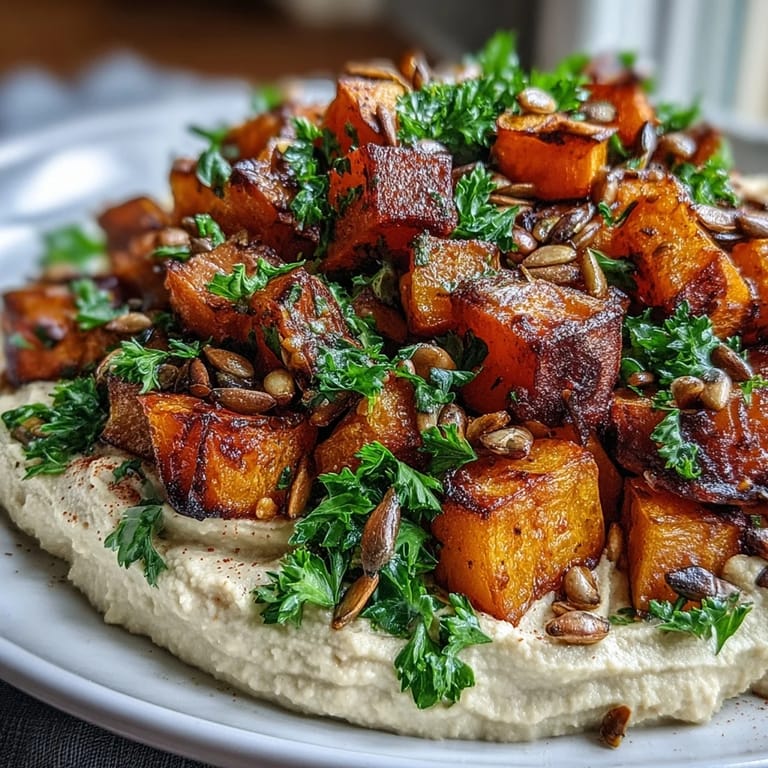
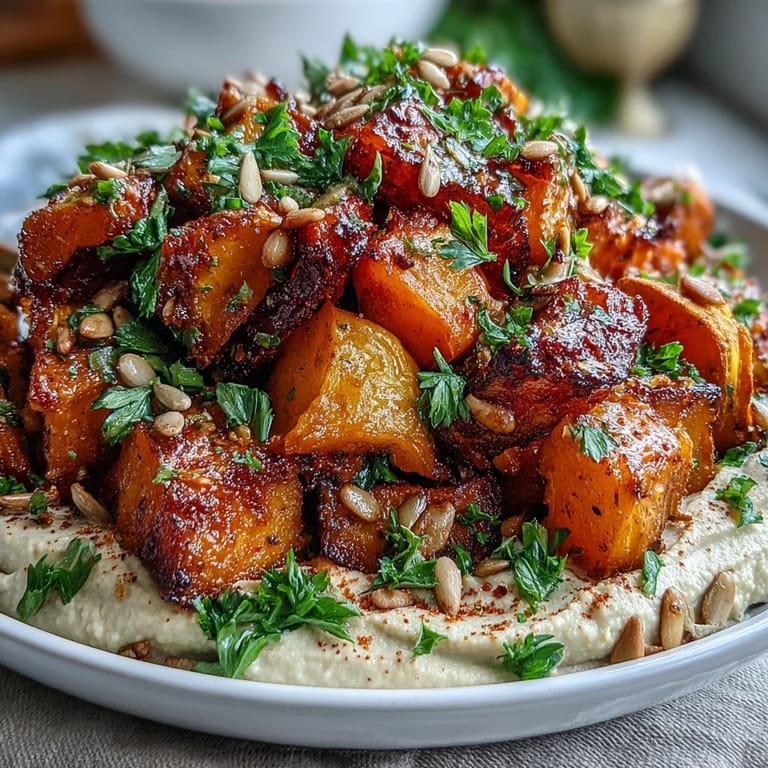
- Spread a generous smear of hummus on each plate, arrange the warm roasted vegetables on top, then shower everything with toasted seeds and fresh parsley. A light dusting of smoked paprika adds a subtle warmth if you're in the mood for it.
 Save to Pinterest
 What started as a quiet Sunday lunch has become something I make whenever I need to feel grounded or when someone in my life needs a reminder that healthy food can be genuinely delicious. There's something about roasting vegetables that fills your kitchen with this warm, sweet smell that just settles everything down.
Why Winter Vegetables Deserve Your Attention
Butternut squash and sweet potatoes are at their peak from October through March, which means they're cheaper, fresher, and taste more like themselves. The cold months concentrate their natural sugars, so when you roast them, they develop this depth that summer vegetables just can't match. I used to reach for salad greens year-round until I realized I was fighting the seasons instead of working with them.
Building Better Hummus
Butter beans make hummus that's lighter and creamier than chickpea versions, with a subtle sweetness that pairs beautifully with roasted vegetables. The tahini is what transforms it from bean paste into hummus—it adds both richness and a slight bitterness that balances everything. Lemon juice brightens everything up, so taste as you go and don't be shy about adding a bit more if you feel like it needs it.
Making This Meal Your Own
This salad is genuinely forgiving and loves improvisation. Roasted carrots add earthiness, caramelized red onions bring sweetness and depth, and if you want more protein, crumbled feta or roasted chickpeas scattered on top make it even more substantial. The beauty is that you can shift ingredients based on what's in your kitchen or what you're craving that day.
- Make the hummus up to three days ahead and store it in an airtight container—it actually tastes better on day two.
- Roasted vegetables keep for four days, so you can prep a double batch and eat this salad multiple ways throughout the week.
- Toast seeds fresh when you can, but if you're in a rush, store them toasted in an airtight container for up to a week.
 Save to Pinterest
 This salad has quietly become my answer to the question of what to cook when I want something nourishing, beautiful, and honest. Make it, feed people you care about, and watch how something this simple becomes something they remember.
Recipe FAQs
- → Can I prepare the vegetables ahead of time?
Yes, you can cube the squash and sweet potatoes up to 24 hours in advance. Store them in an airtight container in the refrigerator until ready to roast.
- → What works well as a substitution for butter beans?
Chickpeas make an excellent alternative and create a slightly thicker, more traditional hummus texture. Cannellini beans also work beautifully for a creamier consistency.
- → How do I store leftovers?
Keep roasted vegetables and hummus in separate sealed containers in the refrigerator for up to 3 days. Reheat the vegetables gently and add fresh toasted seeds when serving.
- → Can I add protein to make it more filling?
Grilled halloumi, roasted chickpeas, or pan-seared tofu complement the flavors wonderfully. A poached egg on top also adds richness and protein.
- → What other vegetables can I roast?
Red onions, carrots, parsnips, or Brussels sprouts work beautifully alongside the squash and sweet potatoes. Adjust roasting times as needed for different vegetable sizes.
- → Is this suitable for meal prep?
Absolutely. The roasted vegetables and hummus can be made in batches and kept refrigerated. Assemble just before eating and add fresh toppings for best texture.