 Save to Pinterest
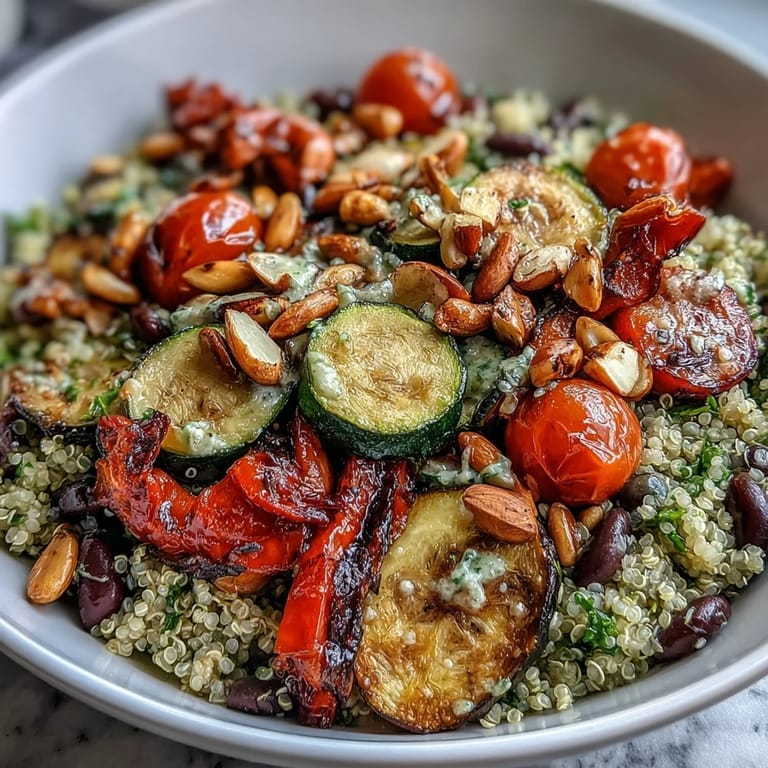
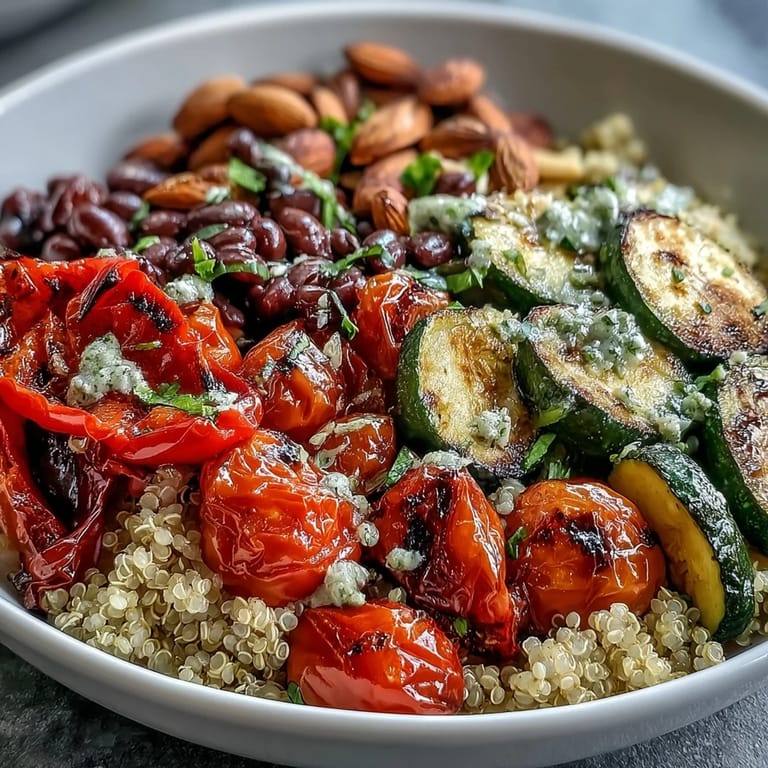
 My friend Sarah showed up to lunch one Tuesday with these colorful bowls, and I watched her arrange them like she was painting something precious. The way the roasted vegetables caught the light, golden and slightly caramelized at the edges, made me realize I'd been eating sad desk salads for months. She drizzled this bright lemon dressing over everything, and one bite changed how I thought about vegetarian cooking—suddenly it wasn't about what was missing, but what was actually there, brilliant and alive.
I made this for a potluck at work and brought extra containers because I wasn't sure anyone would want the vegetarian option. They disappeared within minutes, and two people asked for the recipe before lunch was even over. Watching someone who always orders chicken discover that quinoa could actually taste good was worth every vegetable I chopped.
Ingredients
- Quinoa (1 cup, rinsed): Rinsing removes the bitter coating and makes it fluffier—this single step transformed my relationship with quinoa from thinking it was pretentious to realizing it's actually delicious.
- Red bell pepper, zucchini, carrot, red onion (one each, prepped for roasting): Pick whatever looks good at the market that day, but these four create a perfect balance of sweetness, earthiness, and color.
- Cherry tomatoes (1 cup, halved): They burst slightly when roasted and become these tiny flavor bombs, so don't skip them.
- Black beans or chickpeas (1 can, drained): Draining and rinsing them reduces bloating and improves the texture, making them feel less heavy in the bowl.
- Roasted almonds or walnuts (1/4 cup, chopped): The crunch is essential—it keeps the bowl interesting when you get to the bottom of the bowl.
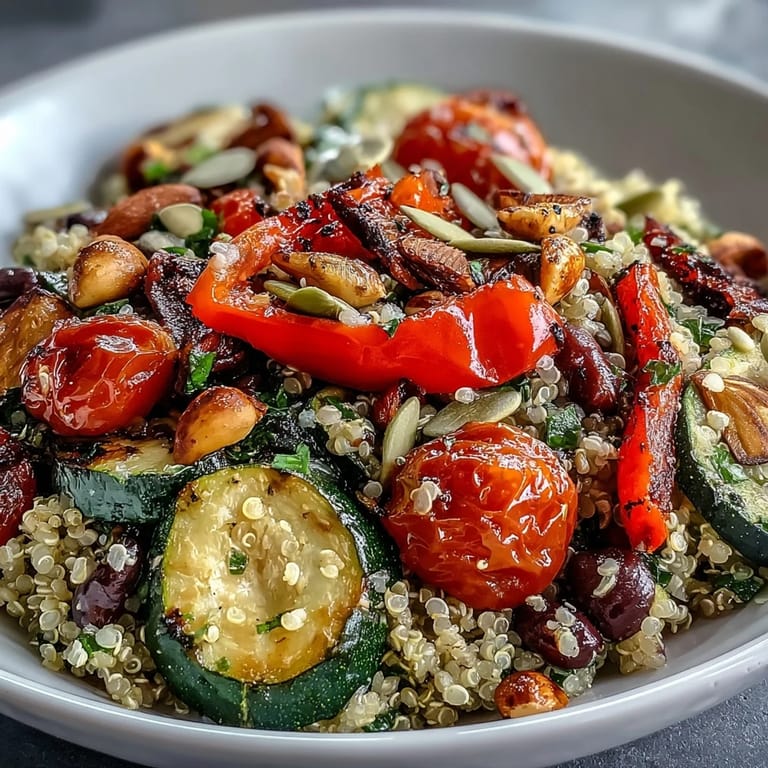
- Pumpkin seeds (2 tablespoons): These add a subtle earthiness and are less likely to upset a nut-sensitive stomach than nuts alone.
- Extra virgin olive oil (5 tablespoons total): Use the good stuff for the vinaigrette, not the roasting, to taste the difference.
- Fresh lemon juice (2 tablespoons): Real lemon juice, not the bottled kind—squeeze it yourself five minutes before serving if you can.
- Dijon mustard (1 teaspoon), maple syrup or honey (1 teaspoon), garlic (1 small clove minced): These three ingredients make the dressing taste like it came from a restaurant, not a home kitchen.
Tired of Takeout? 🥡
Get 10 meals you can make faster than delivery arrives. Seriously.
One email. No spam. Unsubscribe anytime.
Instructions
- Get the oven hot and prep your vegetables:
- Preheat to 425°F while you dice and slice your vegetables into roughly the same size so they roast evenly. Toss them on a baking sheet with 2 tablespoons olive oil, oregano, salt, and pepper—the key is coating them well so they get golden, not just dried out.
- Roast until caramelized:
- Roast for 20 to 25 minutes, stirring halfway through so nothing sticks or burns. You'll know they're ready when the edges are slightly crispy and the vegetables are tender when you poke them.
- Cook the quinoa while vegetables roast:
- Combine rinsed quinoa with water or vegetable broth in a saucepan, bring to a boil, then cover and simmer for 15 minutes until the liquid disappears. Remove from heat and let it sit covered for 5 minutes—this extra resting time makes it fluffier.
- Make the vinaigrette:
- Whisk together 3 tablespoons olive oil, lemon juice, mustard, maple syrup or honey, minced garlic, and a pinch of salt and pepper in a small bowl. Taste it and adjust—it should be bright and sharp, not dull.
- Assemble and serve:
- Divide the fluffy quinoa among four bowls, then layer on roasted vegetables, beans, nuts, and seeds. Drizzle the vinaigrette over everything just before eating so it doesn't get soggy if you're serving these later.
 Save to Pinterest
 My neighbor brought a container of this to my house after I had surgery, and something about eating something so vibrant and full of color made me feel like myself again. It wasn't heavy or sad like hospital food, it was alive, and I think good food can actually heal you in ways that have nothing to do with calories.
The Magic of Roasting Vegetables
There's something alchemical about roasting that I didn't understand until I stopped boiling my vegetables and started roasting them instead. The high heat concentrates the natural sugars, caramelizes the edges, and creates this complexity that tastes nothing like steamed vegetables. It's the difference between eating something because you should and eating something because it's genuinely delicious.
Making It Your Own
This bowl is a canvas, not a rigid rule. Last week I roasted sweet potatoes, broccoli, and cauliflower instead of the original vegetables because that's what I had, and honestly, it was better. The beauty of this dish is that it works with whatever vegetables are in season, whatever beans you have on hand, and whatever nuts your family can actually eat.
Storage and Meal Prep Ideas
I assemble these bowls Sunday night and eat them through Wednesday without getting tired of them, which feels like a superpower. Store them in glass containers with the dressing in a separate jar so the greens stay crisp and nothing gets soggy. You can also make the quinoa and roasted vegetables ahead and assemble fresh each morning if you prefer.
- The vinaigrette keeps in the fridge for up to four days and tastes even better as it sits.
- Roasted vegetables stay fresh for three to four days, so roast a double batch to use on salads or grain bowls all week.
- If you're taking this to work, pack the dressing separately and drizzle it just before eating to keep everything crunchy.
 Save to Pinterest
 This bowl became my answer to the question of what to eat when I want something that feels good in my body and tastes like I actually know how to cook. Make it once and you'll understand why Sarah showed up that Tuesday with such intention.
Recipe FAQs
- → Can I make this bowl ahead of time?
Yes, this bowl is excellent for meal prep. Cook the quinoa and roast vegetables in advance, then store separately in airtight containers for up to 4 days. Assemble individual portions when ready to eat and add the vinaigrette just before serving to maintain freshness.
- → What vegetables work best for roasting?
Firm vegetables like sweet potatoes, broccoli, cauliflower, Brussels sprouts, and butternut squash roast beautifully alongside the bell peppers and zucchini. Root vegetables may need slightly longer roasting time, so cut them into smaller pieces for even cooking.
- → How do I ensure fluffy quinoa every time?
Rinse quinoa thoroughly before cooking to remove bitter saponins. Use a 1:2 ratio of quinoa to liquid, bring to a boil, then simmer covered. After cooking, let it sit covered for 5 minutes off the heat—this crucial step allows moisture to redistribute for perfectly fluffy grains.
- → Can I use other grains instead of quinoa?
Absolutely. Farro, bulgur wheat, brown rice, or couscous work well as alternatives. Adjust cooking liquid and time according to the grain package directions. For faster preparation, use pre-cooked grains or microwaveable options.
- → How can I add more protein?
Incorporate grilled tofu cubes, tempeh, or a poached egg directly on top. Feta cheese adds both protein and tangy flavor. For plant-based protein boost, increase the bean portion or add hemp seeds to the nut and seed mixture.
- → Is this bowl gluten-free?
This bowl is naturally gluten-free when using certified gluten-free quinoa and checking that all canned ingredients (beans, broth) are labeled gluten-free. The vinaigrette and roasted vegetables contain no gluten-containing ingredients, making this suitable for those with gluten sensitivities.