 Save to Pinterest
 Sunday afternoons used to stress me out until I discovered the magic of these power bowls. I was standing in my kitchen, overwhelmed by the week ahead, when I realized that five minutes of smart prep could transform the next five days of eating. That first batch was imperfect—my roasted vegetables were slightly overdone, the dressing too thick—but something clicked. Now, whenever I assemble these bowls, I'm not just cooking; I'm setting myself up for mornings where breakfast is already waiting, lunch doesn't require a decision, and dinner comes together without the usual scramble.
I'll never forget bringing these bowls to my coworker's desk on a Monday morning—she'd been complaining about her energy crashes by 3 p.m. By Wednesday, she asked for the recipe, and by the following week, her whole team was asking what I'd done differently. There's something about handing someone a bowl that proves you can eat well without sacrificing your entire weekend that just changes perspectives.
Ingredients
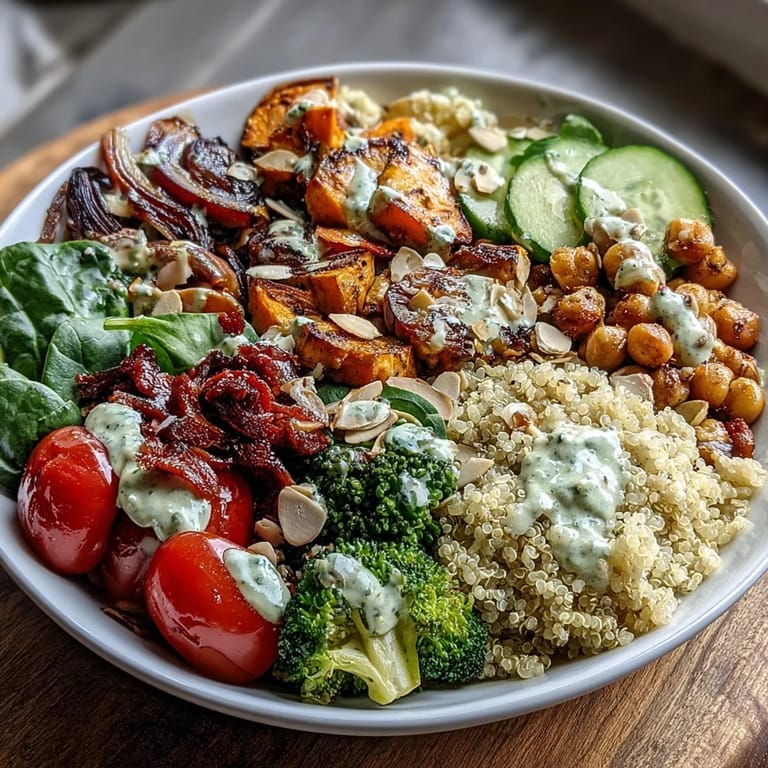
- Quinoa (2 1/2 cups cooked): This ancient grain is your foundation—it's complete protein on its own, which means paired with beans you're creating a powerhouse. I learned to rinse it thoroughly before cooking, which removes the bitter coating and makes it fluffier.
- Sweet potato and broccoli: The roasting caramelizes the sweetness in the potato while turning broccoli into something genuinely crunchy and delicious, not the mushy steamed version most people know.
- Red bell pepper: Fresh color and sweetness that contrasts beautifully with the earthier roasted vegetables below it.
- Black beans and chickpeas (1 1/2 cups each): Two types of beans give you different textures and keep the bowl interesting throughout the week. If using canned, rinsing them is non-negotiable—it removes excess sodium and the starchy liquid that makes everything mushy.
- Cherry tomatoes, cucumber, spinach, red onion: These fresh components stay crisp in the container and add brightness that keeps the bowl from tasting heavy.
- Almonds, pumpkin seeds, sunflower seeds: Texture is everything—these provide crunch and healthy fats that make the whole bowl satisfying rather than feel like diet food.
- Tahini dressing (1/4 cup tahini base): This creamy, nutty dressing brings everything together and actually improves as it sits, flavors melding overnight in the container.
Tired of Takeout? 🥡
Get 10 meals you can make faster than delivery arrives. Seriously.
One email. No spam. Unsubscribe anytime.
Instructions
- Set your oven and prep your vegetables:
- Heat your oven to 425°F and line a baking sheet with parchment—this makes cleanup effortless and prevents sticking. While it preheats, peel and dice your sweet potatoes into roughly 3/4-inch pieces, chop your broccoli into florets about the size of walnuts, and cut your bell pepper into chunks, tossing everything together with olive oil, sea salt, and black pepper until evenly coated.
- Roast until caramelized:
- Spread your vegetables in a single layer and slide them into the oven for 25 to 30 minutes, stirring halfway through so they brown evenly. You'll know they're done when the edges are golden and slightly crispy and a fork easily pierces the sweet potato—this is when the magic happens flavor-wise.
- Cook your quinoa:
- While vegetables roast, cook your quinoa according to package directions if starting from dry. Once cooked, spread it on a plate to cool quickly so it doesn't continue steaming and turn mushy.
- Whisk together your dressing:
- In a small bowl, combine tahini, fresh lemon juice, water, maple syrup, minced garlic, and cumin, whisking until smooth and pourable—you want it creamy like heavy cream, not thick like peanut butter. Taste and adjust seasoning with salt and pepper, and if it feels too thick, add water one tablespoon at a time.
- Prepare your fresh vegetables:
- Halve your cherry tomatoes, dice your cucumber, roughly chop your greens, and thinly slice your red onion. These don't need cooking—just a quick knife and a cutting board.
- Layer your containers strategically:
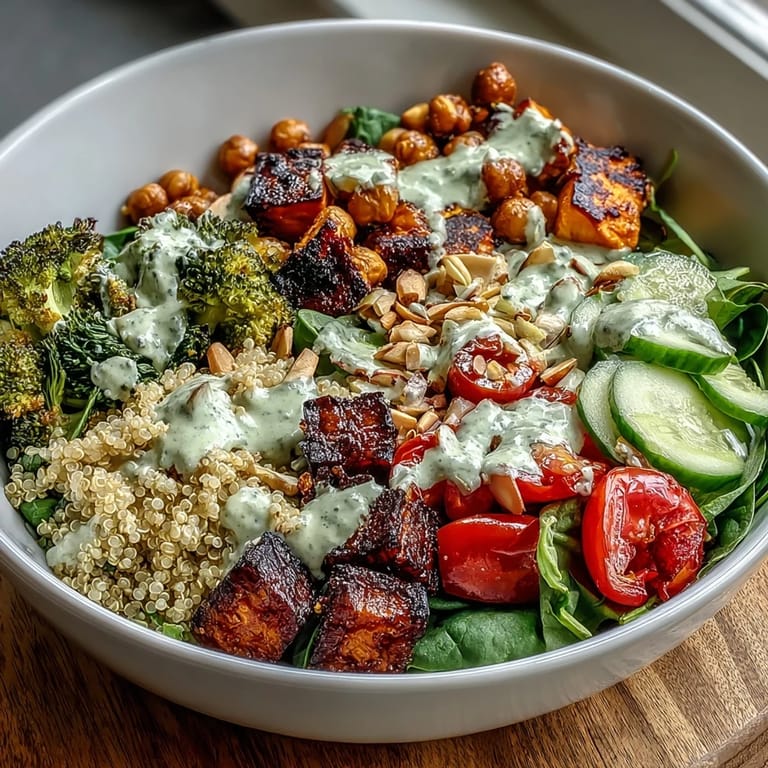
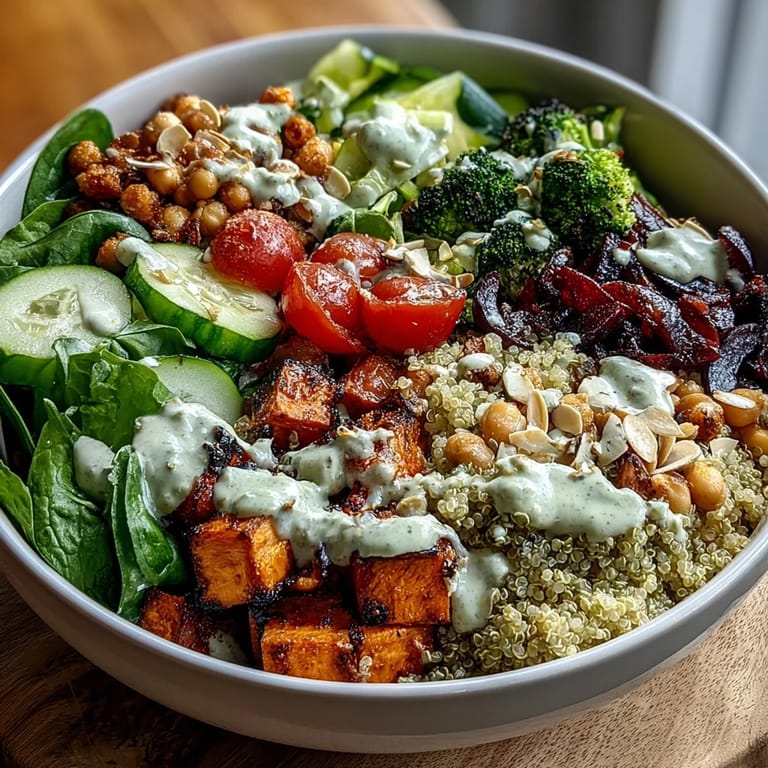
- Start with quinoa as your base (about 1/2 cup per bowl), then arrange roasted vegetables, fresh vegetables, and beans in sections, topping with a scatter of almonds and seeds. This separation keeps everything from getting mushy and lets you see exactly what you're eating.
- Dress strategically:
- Here's the insider move: keep dressing separate if you're storing for more than a day, and drizzle it on just before eating so your greens stay crisp and your seeds stay crunchy. If you're eating the bowl the same day, go ahead and dress it—the flavors will have melded beautifully by lunchtime.
 Save to Pinterest
 There's a moment every Thursday afternoon when I realize I've actually eaten well all week without thinking about it once. That quiet satisfaction—knowing you've fueled your body with real food without the stress of daily decisions—that's when this bowl becomes more than just efficiency. It's self-care disguised as meal prep.
Seasonal Swaps That Keep Things Fresh
The beauty of this bowl is that it genuinely improves when you adapt it to what's at the farmer's market. In summer, I swap sweet potato for zucchini and add fresh corn; in autumn, I'll roast cauliflower instead of broccoli and add pomegranate seeds for tartness. Winter is when I double down on hearty greens like kale and add roasted beets for earthy depth. The core structure stays the same, but your taste buds never get bored.
Dressing Variations for Different Moods
Once you master the tahini base, you can play with it endlessly. A squeeze of sriracha creates heat; a pinch of cumin becomes earthier; swapping lemon for lime and adding cilantro takes it in a completely different direction. I've also made versions with a simple balsamic vinaigrette when I wanted something lighter, or stirred in a spoonful of almond butter when I needed extra richness. The point is, the same bowl never feels repetitive because the dressing can transform it entirely.
Storage Wisdom and Texture Preservation
These bowls last beautifully for up to five days when you understand how each component behaves. The roasted vegetables actually improve as they cool; the beans absorb flavors overnight; the fresh vegetables will soften slightly but stay edible. The only real enemy is moisture—that's why separating your dressing matters, why you want to dry your greens thoroughly, and why packing seeds whole rather than chopped keeps them from becoming soggy.
- Pack your dressing in a small container and keep it separate from the bowl if storing longer than a few hours.
- Add your almonds and seeds on the morning you eat the bowl rather than packing them on Sunday for maximum crunch.
- If your greens start to wilt by day four, toss them with a squeeze of lemon juice or a splash of vinegar to revive them.
 Save to Pinterest
 These bowls have quietly become my secret weapon for eating well without making it harder than it needs to be. They're proof that taking care of yourself doesn't require expensive ingredients or complicated techniques—just a little planning and the willingness to spend an hour on Sunday that gives you five days of feeling good.
Recipe FAQs
- → How long do these bowls stay fresh?
These keep well refrigerated for up to 5 days. For best results, store the dressing separately and drizzle it just before eating. This prevents the vegetables from becoming soggy and maintains the ideal texture.
- → Can I freeze these bowls?
Freezing isn't recommended as the fresh vegetables (tomatoes, cucumber) and creamy tahini dressing don't thaw well. However, you can freeze the roasted vegetables and cooked quinoa separately for up to 3 months, then assemble with fresh ingredients.
- → What other grains can I use?
Brown rice, farro, bulgur, or wheat berries work beautifully as substitutes. Each offers a slightly different texture and cooking time. Brown rice adds a nutty flavor, while farro provides a pleasantly chewy bite.
- → How can I add more protein?
Incorporate grilled chicken, tofu cubes, hard-boiled eggs, or crumbled feta cheese. You could also add hemp seeds or increase the portion of beans and chickpeas. Each addition provides different nutritional benefits and flavors.
- → What vegetables work best for roasting?
Beyond the suggested options, try zucchini, cauliflower, carrots, Brussels sprouts, or butternut squash. Root vegetables need slightly longer roasting time, while softer vegetables like zucchini cook faster. Adjust accordingly.
- → Can I make the dressing ahead?
Absolutely! The tahini dressing keeps well in the refrigerator for up to one week. It may thicken over time—simply whisk in a splash of water or lemon juice to reach the desired consistency before serving.